In compliance operations for cross-border e-commerce platforms (e.g., Amazon, eBay) and overseas social media (e.g., TikTok, Facebook, LinkedIn), "account association" has always been a sword hanging over operations teams. Many teams, after trying to clear caches, enable incognito mode, or frequently change proxy IPs, still encounter abnormal risk controls or account bans due to association. The root cause is that modern internet platforms have fully shifted from traditional Cookie mechanisms to more covert, high-entropy browser fingerprinting technology for device identification.
As the core infrastructure to address this pain point, fingerprint browsers (anti-detect browsers) do not help users "forge identities" or bypass platform rules. Instead, they build multiple independent, logically consistent virtual browser environments on a single physical device, achieving physical-level environment isolation and secure collaboration.
New Trends in Browser Fingerprint Tracking in 2026: AI Risk Control and High-Entropy Feature Extraction
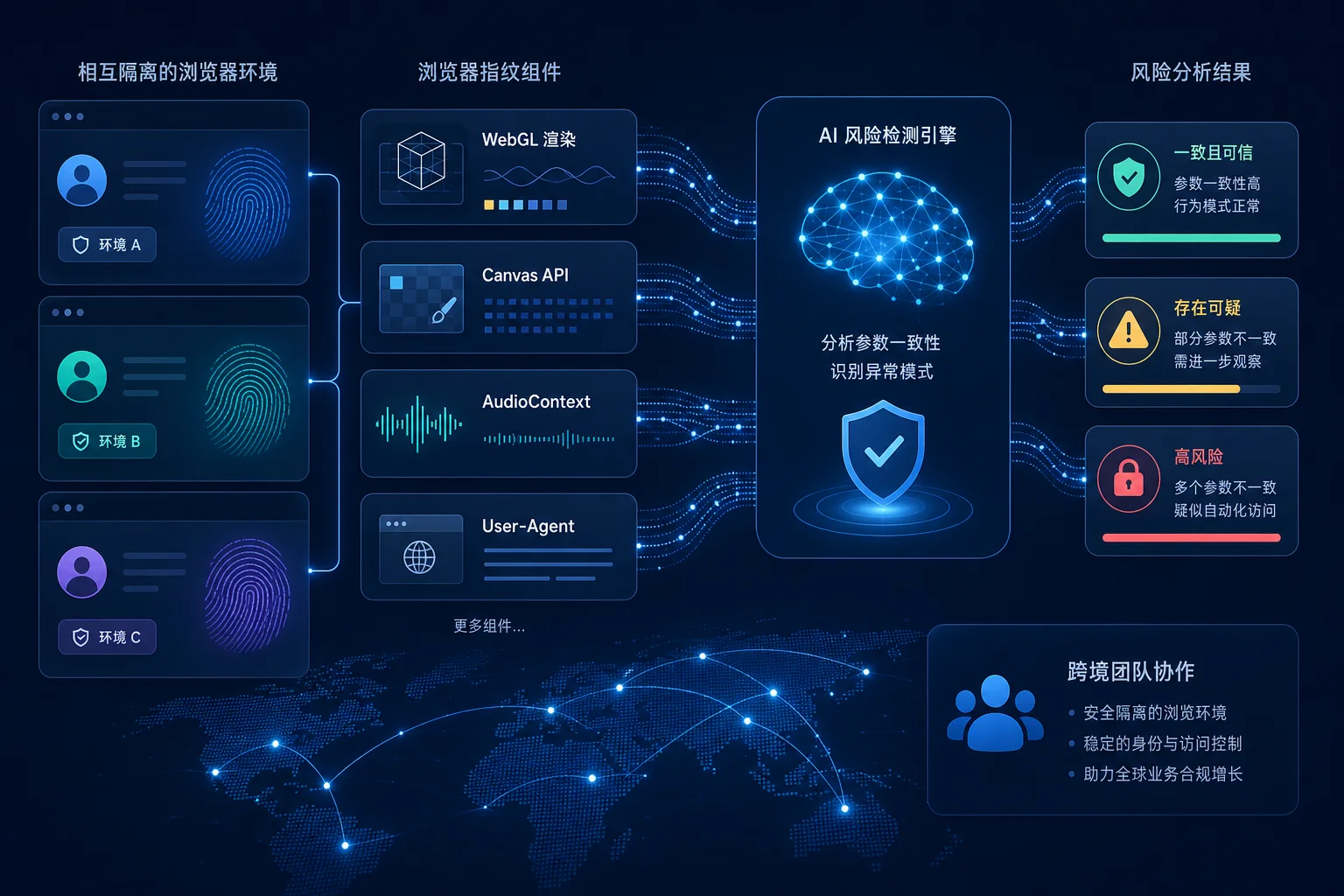
According to the 2026 Fingerprint Device Intelligence Report published by Fingerprint in March 2026, based on statistics from 23 billion device identification events globally, desktops have become the primary battlefield for risk control detection. As major browsers gradually restrict third-party cookies and the leakage of detailed User-Agent information, platform risk control technologies have fully shifted to high-entropy fingerprint recognition based on hardware characteristics.
A fingerprint security study by cybersecurity research firm TrustMyIP in July 2026 pointed out that among the world's top 20,000 mainstream websites, over 12.7% have deployed Canvas and WebGL/WebGPU rendering detection. A more critical breakthrough is the introduction of AI and machine learning risk control models:
- Logical Conflict Detection: AI models no longer merely match a single Hash value but assess logical consistency among dozens of hardware parameters (e.g., whether a macOS User-Agent matches Windows-exclusive Direct3D GPU driver rendering paths).
- Significantly Improved Noise Recognition: The previous strategy of "forced random noise injection" used by some anti-tracking tools now appears as a conspicuous "anomalous feature" in the eyes of AI models, with detection recognition rates as high as 80% to 90%.
Why Do Traditional Anti-Association Methods Frequently Fail?
Many beginners mistakenly believe that "changing an IP or clearing cookies is enough to get a new environment." However, in modern risk control systems, this practice has serious security risks:
- Environmental Parameter Gaps: Only changing the proxy IP leaves the browser's screen resolution, installed font list, AudioContext sound sampling granularity, and WebRTC interface parameters unchanged. Platform systems can easily correlate access behaviors under different IP addresses to the same physical hardware.
- Risk Control Anomalies from Blind Randomization: Randomly assigning irregular Canvas or WebGPU obfuscation parameters to each account can make the browser environment look "extremely unnatural," directly triggering secondary manual review by the platform's anti-fraud mechanism.
- Cookie Leakage and Environmental Drift During Team Collaboration: When multiple team members log into the same account on devices in different regions, the device fingerprint changes drastically in a short time, easily triggering cross-location login protections.
How Cross-Border Teams Build Compliant Multi-Account Environment Isolation Systems?
Based on fingerprint test conclusions from authoritative technical organizations such as ScrapingBee in July 2026, truly stable environment isolation hinges on "maintaining continuous logical consistency of hardware." Cross-border e-commerce and social media operations teams should establish a four-layer protection system:
1. Engine-Level Kernel Isolation
Use deeply modified Chromium or Firefox kernels to give each browser profile completely independent cookie storage, Local Storage, IndexedDB databases, and cache directories, eliminating cross-environment data contamination at the source.
2. Real Hardware Feature Library Fitting
Abandon blind randomization parameters and instead extract logically self-consistent hardware feature combinations from real-device databases. This includes GPU rendering strings, system font lists, Canvas sampling characteristics, and AudioContext frequency response curves, ensuring each profile presents a flawless, natural authenticity in tests like Pixelscan or CreepJS.
3. Strict Synchronization of Network Environment and Geographic Timezone
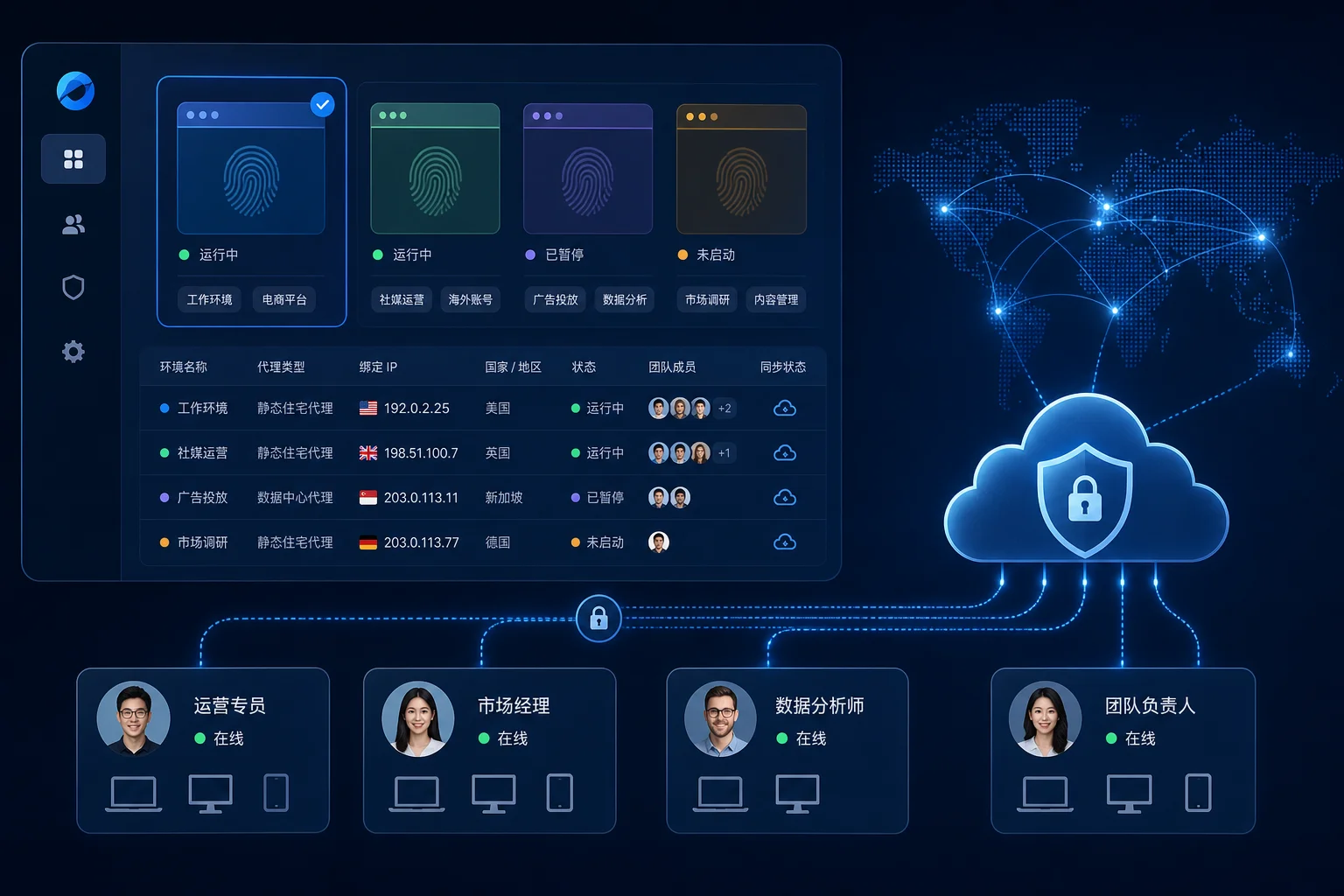
Bind independent environments to high-quality exclusive residential or mobile proxy IPs, and ensure the browser's system timezone, language preferences, geolocation API, and DNS resolution path are 100% matched to the proxy IP's actual geographic location.
4. Team-Level Permission Isolation and Cloud-Based Secure Sync
Avoid directly sharing account passwords via plain text or manually exporting cookies. Establish a role-based (RBAC) team collaboration mechanism, securely sync environment profiles to the cloud, and ensure that when different members log into the same account, the environment fingerprint remains completely stable and consistent.
In the security practice column of the NexBrowser official blog, we also repeatedly emphasize: The core logic of multi-account operations is "asset compliance protection and environment isolation." Only through logically fitted hardware and team permission management can we build long-term secure business support in an increasingly stringent risk control environment.
Multi-Account Security Operations Self-Checklist
Before daily multi-account compliance operations, we recommend operations teams perform systematic checks according to the following standards:
- [ ] Fingerprint Consistency Check: After starting a profile, are hardware parameters (UA, WebGL, Canvas) logically consistent with the target operating system?
- [ ] Network Connectivity and Timezone Matching: Does the proxy IP's geographic location match the browser's timezone and language? Is WebRTC properly configured to prevent leaks?
- [ ] Account Cookie Isolation: Are different business environments completely isolated in terms of storage?
- [ ] Team Collaboration Audit: Are operation logs and role assignments enabled to avoid co-login anomalies from multiple simultaneous access?
Through rational technology selection and standardized compliance processes, fingerprint browsers will serve as the digital infrastructure for cross-border enterprises going global, helping teams achieve efficient collaboration and scaled growth while ensuring account security.



Comments(0)